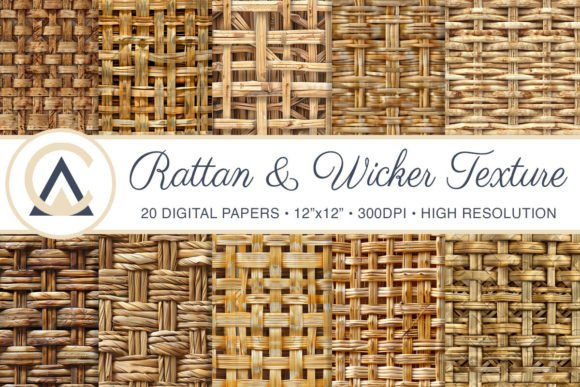
Rattan & Wicker Wood Texture Backgrounds for Creative Design
The Organic Warmth of Natural Texture
There's an unmistakable quality to natural materials that immediately grounds a design in reality. Rattan and wicker textures carry a specific personality—they're intricate yet approachable, structured yet deeply organic. These aren't just generic wood grain patterns; they represent a specific craft tradition, evoking feelings of handcrafted quality, coastal relaxation, and bohemian warmth. The visual rhythm of woven fibers creates a subtle, repeating pattern that feels both sophisticated and inviting. This makes Rattan & Wicker Wood Texture Backgrounds a powerful tool for designers seeking to inject authentic, tactile warmth into their projects without resorting to flat, artificial surfaces. The texture provides depth and a sense of material honesty that synthetic patterns often lack.
Practical Applications Across Creative Disciplines
The true value of these seamless texture backgrounds lies in their remarkable versatility. They function as a foundational design asset, adaptable to an enormous range of contexts. For brand identity work, a wicker texture can instantly communicate a brand's values—think artisanal food products, boutique wellness brands, sustainable goods, or travel companies. It grounds a logo design or business card in a narrative of craftsmanship and natural quality. In packaging design, these backgrounds transform product labels, box wraps, and shopping bags, making them feel premium and thoughtfully designed.
Digital creators will find them equally useful. As a background for social media graphics, they add visual interest that stops the scroll, providing a rich canvas for text overlays and product photos. For web design, they can be used in hero sections, footers, or as subtle textures behind content blocks to break the monotony of solid color. The provided 12"x12" 300 DPI files in both PNG and JPEG formats are optimized for high-resolution printing, making the transition from screen to physical product seamless. This is where the commercial font licensing aspect is crucial—these assets are built for real-world production.
Consider the tangible projects: wedding invitations gain a rustic elegance, while scrapbook paper and greeting cards develop a unique, handmade character. Small business owners can use them to design cohesive signage, custom mugs, or branded t-shirts that stand out. Publishers and bloggers can apply them as backgrounds for editorial design elements, chapter headings, or journal covers, creating a consistent visual language that enhances reader engagement. The key is to treat these textures not as mere decoration, but as a core component of the project's visual hierarchy and overall atmosphere.
Integrating Textures into Your Design Workflow
Working effectively with any premium font or texture asset requires a strategic approach. First, evaluate the texture's visual weight. The intricate weave of rattan is a medium-weight texture, meaning it can support bold headlines without overwhelming them, but it also pairs beautifully with cleaner elements. A common and effective font pairing strategy is to combine a textured background with a clean, modern sans serif font for body text. This contrast ensures readability while allowing the texture to establish mood. Conversely, pairing it with a script font or handwritten font can amplify the handmade, artisanal feel, ideal for projects like bakery branding or craft fair promotions.
Before finalizing your choice, test the texture in context. Place your primary text and graphical elements over it. Does the texture compete with your message or support it? Adjust the texture's opacity or apply a slight color overlay to ensure it enhances rather than detracts. Since the files are high-resolution and easy to edit, you can resize and manipulate them in most design software—Adobe Photoshop, Illustrator, Affinity Designer, or even Canva—to fit your exact dimensions. This flexibility is part of what makes them a valuable component of a modern designer's toolkit of design assets.
Remember, the goal is to build a cohesive brand identity or creative project. A single, well-chosen texture can be the thread that ties together a website, social media presence, and printed materials, creating instant recognition and professionalism. By using these Rattan & Wicker Wood Texture Backgrounds thoughtfully, you're not just adding a pattern; you're embedding a story of quality and natural beauty into your work. Explore the collection, experiment with pairings, and discover how this organic element can elevate your next creative endeavor.