The Ethereal Appeal of Watercolor Texture Backgrounds
More Than Just a Background: A Digital Atmosphere
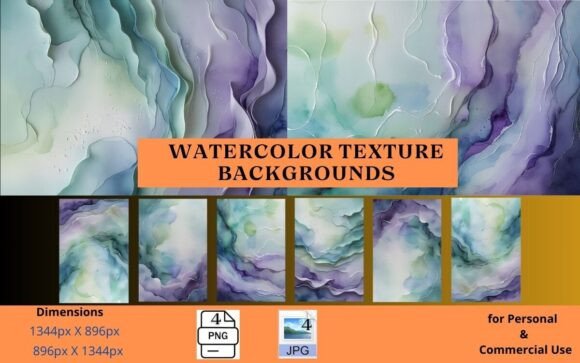
When you first look at this collection of Watercolor Texture Backgrounds, you’re not just seeing pixels; you are stepping into a mood. The specific set described here features a whimsical, dreamy aesthetic defined by organic, layered textures. It moves away from the rigid geometry of modern digital design and embraces the fluidity of traditional art. The palette relies on soft, muted hues of blue, green, and purple, creating a visual experience that evokes a distinct sense of ethereal calmness. It isn’t a flat color block. Instead, the subtle blending and gradient effects generate a profound sense of depth and dimensionality, making the colors appear as though they are floating just above the surface of the screen.
For designers and content creators, the visual weight of an asset matters. These textures feature gentle washes and delicate drips that mimic authentic pigment behavior. You can even see the subtle paper grain, which adds a tactile quality to digital projects. There are slight, white, wispy brushstrokes and faint, darker accents woven into the composition. These elements provide the necessary contrast and visual interest to keep the eye moving, preventing the background from becoming boring while ensuring it remains a supporting player rather than the main character.
Technical Specifications for Modern Workflows
Understanding the technical utility of design assets is just as important as appreciating their beauty. This package is built for versatility. The primary Watercolor Texture Backgrounds are provided in two distinct orientations: a landscape format (1344px X 896px) and a portrait format (896px X 1344px). This dual sizing is crucial for modern creators who work across multiple platforms. The landscape option fits perfectly for website hero sections, desktop wallpapers, or standard video thumbnails, while the portrait orientation is optimized for mobile-first content, Instagram Stories, Pinterest pins, or specific print layouts.
You receive a total of four JPG and four PNG files. The choice between these formats is a practical one. JPGs are excellent for web use where file size needs to be managed without losing the essence of the watercolor wash. However, the inclusion of PNG files is a significant advantage. PNGs preserve the high-quality data of the delicate brushstrokes and paper textures without compression artifacts. This is particularly important if you plan to layer these backgrounds under text or overlay them with other graphics; the cleaner the file, the more professional the final composition. Both formats are licensed for personal and commercial use, giving entrepreneurs and small business owners the freedom to use them in client work, merchandise, and digital products without legal hesitation.
Strategic Applications for Brand Identity
How does a soft, artistic background fit into a hard-nosed business strategy? The answer lies in differentiation. In a digital landscape saturated with flat design and corporate minimalism, Watercolor Texture Backgrounds offer a human touch. For a brand strategist, these assets are invaluable for building an identity that feels approachable, creative, and authentic.
Digital and Web Design
In web design, a background like this can transform a sterile landing page into an immersive experience. Because the colors are muted and the blending is subtle, it serves as an excellent canvas for legibility. You can place dark sans serif typography over these washes without the text getting lost. It works exceptionally well for businesses in the wellness, beauty, wedding, or artisanal food sectors. The texture adds enough visual interest to keep users scrolling, reducing bounce rates by making the site feel "sticky" and engaging.
Social Media and Marketing
For social media managers and marketers, consistency is key. These textures provide a unified aesthetic for Instagram grids or Facebook banners. Imagine a series of quote graphics or promotional announcements where the background changes slightly in hue but maintains the same paper texture and fluid style. It creates a cohesive brand story. The "whimsical, dreamy" nature of the assets also helps in capturing attention in a fast-scrolling feed; the organic shapes stand out against the rigid UI of social apps.
Publishing and Editorial Design
Publishers and authors can leverage these backgrounds for book covers, particularly in the Young Adult, Fantasy, or Poetry genres. The "ethereal calmness" and "wistful atmosphere" described in the textures translate perfectly to storytelling. They can also be used for chapter headers or page borders in interior layout design, adding a premium feel to the reader's experience. It signals to the audience that the content is curated and artistic, not just mass-produced.
Practical Guidance on Implementation
Integrating Watercolor Texture Backgrounds into your workflow requires a bit of finesse to maintain professionalism. Here are some practical tips for getting the most out of this asset:
- Typography Pairing: Because the background is organic and flowing, your typography should provide contrast. Avoid overly decorative script fonts for body text, as they will compete with the watercolor drips. Instead, opt for a clean, geometric sans serif font or a sturdy serif font for headings. The goal is to create a visual hierarchy where the text is clearly readable against the soft wash of color.
- Color Adjustments: Don't be afraid to tweak the hue or saturation in Photoshop or Canva to match specific brand guidelines. Since the files are high-quality, they can withstand minor color grading without breaking down.
- Opacity and Blending: To make the background even more subtle, try reducing the opacity or using "Multiply" blending modes if you are layering it over a solid color. This can help the texture integrate seamlessly with your existing brand assets.
- Contrast Management: Pay attention to the "faint, darker accents" in the texture. If you are placing text over a darker blotch, ensure there is enough contrast. Sometimes, adding a semi-transparent white shape behind the text (a "knockout" box) can help maintain readability while keeping the artistic vibe.
The Value of Artistic Assets
In the realm of Watercolor Texture Backgrounds, quality makes all the difference. Cheap textures often look muddy or pixelated, which can cheapen a brand's perception. This specific collection, with its high-resolution dimensions and attention to detail—like the visible paper grain and delicate drips—offers the kind of premium finish that clients and audiences expect from high-end design. Whether you are crafting a logo design, developing packaging for a boutique product, or curating a blog, these backgrounds provide a versatile foundation that balances artistic flair with commercial viability. They remind us that in a digital world, a little bit of organic texture can go a long way in building a connection with the viewer.