Wildflowers on Wooden Backgrounds: A Design Asset Guide
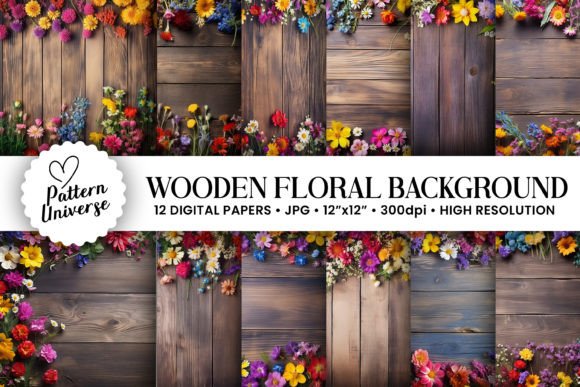
There’s a specific kind of visual comfort that comes from pairing organic elements with raw textures. As a designer, I’m constantly looking for assets that bridge the gap between the digital world and tangible reality. The Wildflowers on Wooden Backgrounds collection does exactly that. It captures the fleeting beauty of nature and anchors it with the rustic, grounding presence of wood grain. This isn't just a random assortment of botanicals; it is a curated set of 12 AI-generated digital papers designed to evoke warmth, nostalgia, and a handcrafted aesthetic.
When you first view these papers, you notice the interplay of light and texture. The wood backgrounds vary from weathered barn wood to smoother, lighter timber, providing a neutral canvas that allows the wildflowers to take center stage. The florals themselves aren't stiff or overly manicured. They possess the chaotic beauty of a meadow—daisies, poppies, lupines, and various foliage intertwined naturally. The 3600 x 3600 pixel resolution ensures that whether you are zooming in for a detail shot on a website or printing a large-scale poster, the integrity of the image remains crisp at 300dpi. For anyone in the creative space, this level of quality is non-negotiable.
The Aesthetic: Where Rustic Meets Modern
Understanding the personality of Wildflowers on Wooden Backgrounds is key to using it effectively. This collection sits comfortably at the intersection of farmhouse charm and contemporary design. The "wood" element provides a sense of stability and tradition, while the "wildflower" element introduces color, movement, and modernity. Because these are AI-generated, the blending is seamless. There are no harsh cutout lines where the flower meets the wood; instead, the lighting and shadows interact in a way that feels cohesive.
This style is incredibly versatile. It speaks to the "cottagecore" trend that remains strong in lifestyle branding, but it also fits perfectly into "earthy" or "eco-friendly" visual identities. If you are working on a project that needs to feel grounded, authentic, and vibrant without being overwhelming, this aesthetic hits the mark. It avoids the sterility of flat vector graphics and the dated look of low-resolution stock photos. Instead, it offers a rich, tactile experience that draws the viewer in.
Practical Applications for Creators and Businesses
As a creative professional, I look for assets that offer a high return on time invested. You want files that are ready to use with minimal tweaking. Here is where this collection shines across different industries and project types:
For Packaging and Product Design
If you are a small business owner selling artisanal goods—think candles, soaps, jams, or coffee—packaging is everything. The Wildflowers on Wooden Backgrounds papers serve as exceptional backdrops for label design. You can layer typography over them, but the texture adds instant value perception. A simple white sans-serif font over a wildflower background instantly communicates that the product inside is natural and made with care. It’s a shortcut to brand storytelling.
For Digital Marketing and Social Media
Content creators and marketers know that stopping the scroll is the primary objective. These digital papers work beautifully as backgrounds for Instagram quotes, Facebook banners, or Pinterest pins. The high resolution means you can crop in tight to show just a cluster of flowers for a profile picture, or use the full wide shot for a story background. The wood texture ensures that any text overlaid on the image remains legible, provided you manage the contrast correctly. It’s an excellent way to maintain a cohesive brand identity across social channels without having to commission custom photography.
For Editorial and Web Design
In web design and editorial layouts, breaking up text is crucial for readability. These backgrounds can be used as section dividers, header images, or even subtle footer textures. For a lifestyle blog or a digital magazine, using Wildflowers on Wooden Backgrounds creates a visual rhythm that guides the reader's eye. It signals a shift in topic or a pause in the content, making the reading experience more enjoyable and less fatiguing.
For Personal Projects and Stationery
Never underestimate the power of physical paper. For the hobbyist or crafter, these files are perfect for DIY projects. You can print them on cardstock to create custom greeting cards, invitations, or scrapbook pages. The 12" x 12" (3600px) square format is actually the standard size for digital scrapbooking, making this collection instantly compatible with that workflow. Imagine printing a sheet of this to use as a background for a framed photo; it adds a layer of depth that plain white matting simply cannot achieve.
Integrating Assets into Your Workflow
Having a great asset is one thing; knowing how to integrate it into a professional workflow is another. Here are some practical tips for getting the most out of these 12 papers:
- Font Pairing: Because the background is busy with organic shapes, your typography needs to be clean. I recommend pairing these backgrounds with a bold, geometric sans serif font. The contrast between the rigid, clean lines of modern typography and the flowing nature of the wildflowers creates a sophisticated visual hierarchy. Avoid overly ornate script fonts unless they are very legible, as they can get lost in the foliage.
- Color Extraction: Use the eyedropper tool in your design software to pull specific colors from the flowers. If you see a specific shade of purple or orange in the petals, use that exact hex code for your buttons or accent text. This ensures total color harmony and makes the design feel intentional rather than accidental.
- Opacity and Overlays: Don't be afraid to lower the opacity of the background or place a semi-transparent white overlay on top if you need to place a lot of text. This allows the texture to show through while ensuring your message remains the priority.
Technical Specifications and Usability
From a technical standpoint, the Wildflowers on Wooden Backgrounds collection is user-friendly. The files are delivered in a single zip file, which is standard for digital delivery. Once unzipped, you have access to 12 distinct variations. The 300dpi resolution is the industry standard for print quality. This means if you decide to use these for packaging design or greeting cards, you won't run into pixelation issues, provided your printer is calibrated correctly.
The square aspect ratio (12" x 12") is versatile. While it is the native format for scrapbooking, it is easily adaptable for other formats. You can crop it to a 16:9 ratio for a website hero image without losing the essence of the design, or crop it vertically for a mobile phone wallpaper. The composition of the AI-generated images generally places the visual interest centrally or fills the frame entirely, giving you flexibility in how you crop.
Final Thoughts on Utility
In a digital landscape saturated with generic stock imagery, Wildflowers on Wooden Backgrounds offers a breath of fresh air. It provides a specific mood—warm, inviting, and natural—that can be difficult to manufacture from scratch. Whether you are a brand strategist looking to soften a corporate identity, a blogger wanting to beautify a layout, or a crafter looking for the perfect backdrop for a card, this collection delivers real value. It’s a versatile toolkit that bridges the gap between the digital and the natural world, helping you create designs that resonate on a human level.